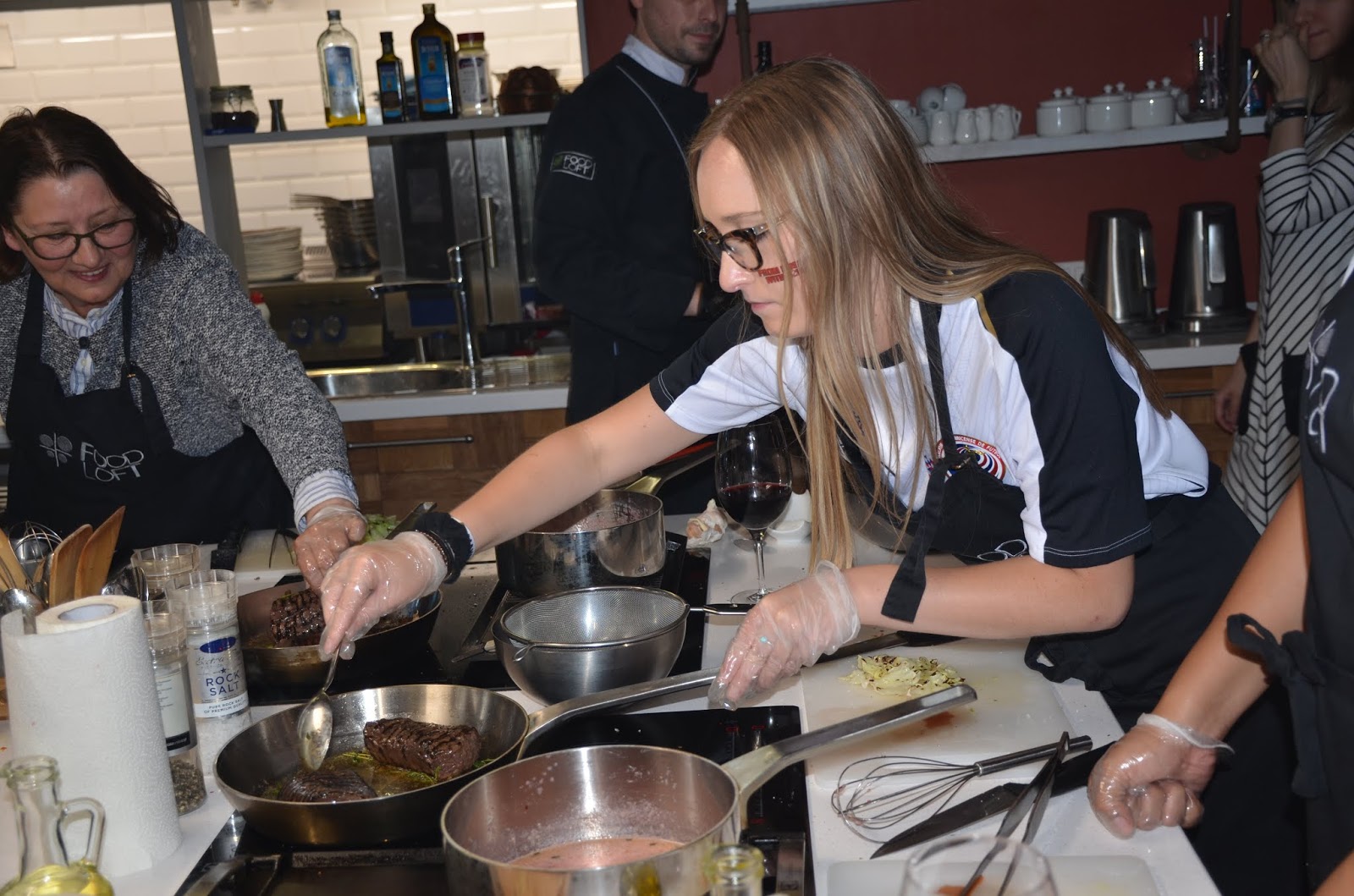
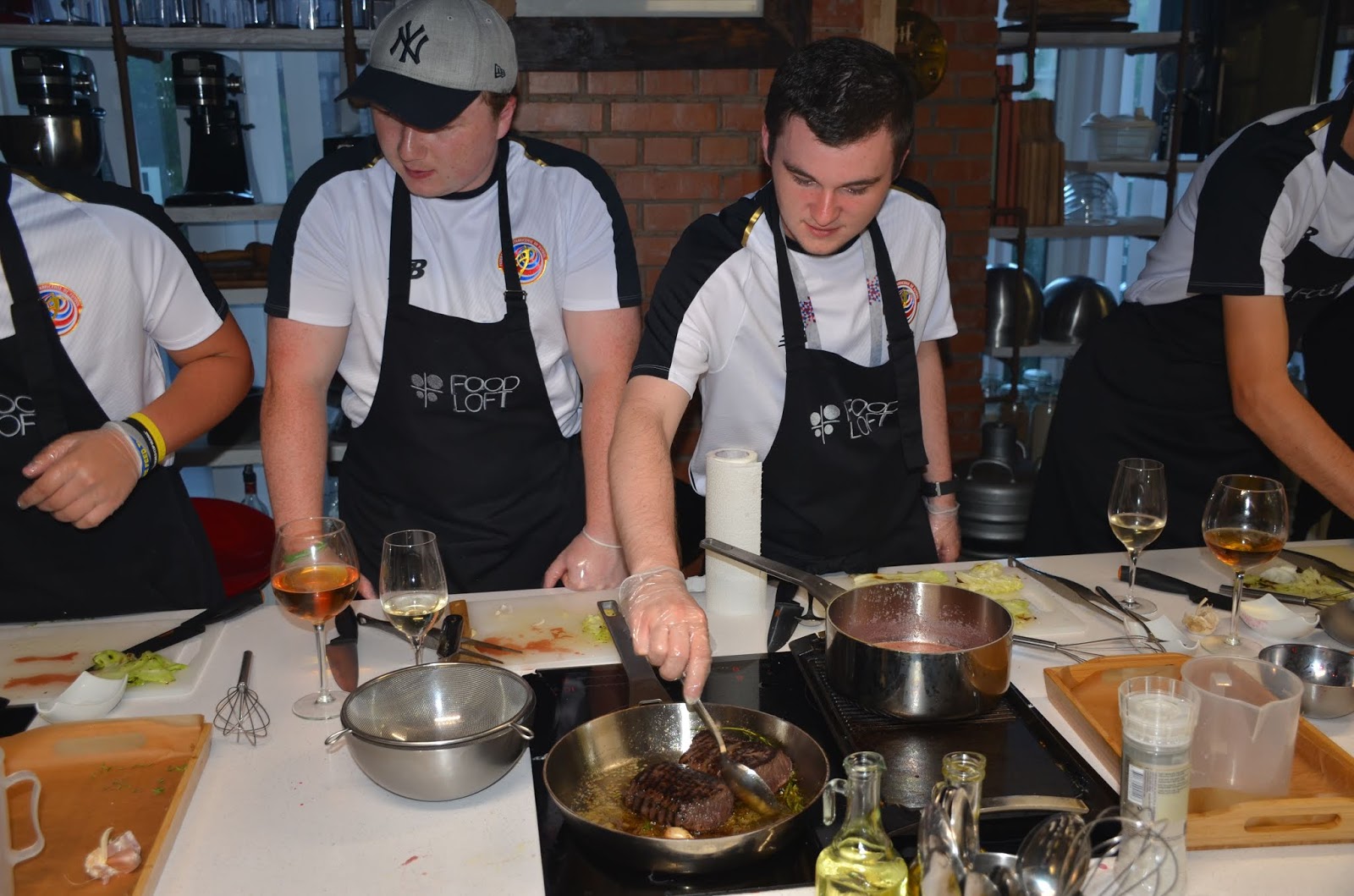
I will post more information later, but for now, here's the crew:Faculty
Curt Hamakawa (Wilbraham, MA)
A blog about business aspects of sport, with an international focus
I will post more information later, but for now, here's the crew:
A couple thoughts occurred to me last night on my return to the states that perhaps were contributing factors to Chicago's emphatic defeat in its bid to host the 2016 Olympics. First, the point touched upon by the IOC member from Pakistan -- Syed Shahid Ali -- in his question to the Chicago delegation. He raised the issue of the difficulty that some foreign travelers have in entering the U.S., and how such inconvenient burdens can be mitigated. Forget about foreign travelers! It took me an elapsed time of one hour and 20 minutes from the time of my flight's arrival at Washington-Dulles to the time I finally cleared customs, passport control, luggage transfer, and security screening to be on my way to catch my connecting flight! By contrast, it must have taken all of ten minutes (okay, maybe 15) to clear the gauntlet at the Copenhagen Airport. Also, while the IOC could not help but be smitten by President and Mrs. Obama's visit, there is no question that the paralysis caused by the heightened security throughout the entire city -- from the airport to hotels, and from transportation to the convention center itself -- attributable to his attendance (and to be fair, to other government leaders as well) wreaked havoc on the usual protocols, which surely conjured thoughts of yankee imperialism among some IOC members. In retrospect, me thinks that these were not so small factors in at least some voters' minds.
It is now mid morning Sunday in Copenhagen, and I must shortly board my return flight home so that I can be in class Monday morning. Spending the last few days at the IOC Session and Olympic Congress has been exhilarating, if not exhausting. In addition to witnessing the final presentations of the four cities competing to host the 2016 Olympics -- all star-studded and superbly choreographed -- and the suspense-filled announcement of Rio de Janeiro as the winner, I had the opportunity to meet many of my friends and colleagues from the Olympic movement. At least five members of the CISB advisory board were here, and I had the chance to visit with them all: Ron Froehlich, president of the World Games; Greg Harney, president of Global Sports Partners; Dick Palmer, executive vice president of the British Olympic Association; Kostas Georgiadis, dean of the International Olympic Academy; and Ichiro Kono, chair and CEO of Tokyo 2016 bid committee. And yes, the Danish have been absolutely splendid . . . both the pastry and the people!
The atmostphere here at the Olympic Congress the day after Rio de Janeiro became the newest Olympic city is akin to the day after a classic, down-to-the-wire political election. The loser has retreated to his home to lick his wounds, while the victor is visible and milling about, but attempting to be gracious in his joy and exult.
1. First and foremost, if you're going to play, you've got to know the rules of the game. Garnering just 18 votes out of 94 cast is not a strong indication of a mastery of the game. Next time, get a good, reliable whip (vote getter-counter) and no-nonsense enforcer to keep the friendlies firmly in the stable.
At this morning's opening session of the 13th Olympic Congress, UN Secretary General Ban ki-Moon gave the keynote address, drawing an analogy between the 205 National Olympic Committees and the UN as international organizations that seek to improve human conditions throughout the world.
Reflecting overnight on the results of the IOC voting that awarded the 2016 Olympics to Rio de Janeiro, my opinion is that Chicago's first-round elimination was neither a rebuke of President Obama (because he and the First Lady were genuinely and warmly embraced here in Copenhagen) nor a referendum on Chicago's bid per se, but rather, a combination of other factors.
The round-by-round voting is as follows:
Jubilation, heartbreak, relief, and shock. Rio is exulting in the joy of its victory; Madrid is morose with despair over getting so close, but not claiming the prize in its fourth consecutive attempt in 16 years; Tokyo knew it would take a miracle to win, and was grateful that it was not the first city to be eliminated; and Chicago is in utter disbelief that even with President and Michelle Obama's full-court press, it finished dead last! This, my friends, is the world of international politics that is the IOC!
Friday morning, October 2, 2009. In the 10-minute drive from the Copenhagen Airport Hilton to the Bella Center (convention center) where the IOC Session will vote this afternoon on the host city for the 2016 Olympic Games, you could tell that something out of the ordinary was going on. The presence of police along the highway, stationed at every overpass, and positioned on rooftops -- and even in helicopters overhead -- signaled that this was no ordinary event. This event, of course, was not the meeting per se, but rather the arrival of U.S. President Barack Obama via motorcade. There is almost nothing comparable to the spectacle of the arrival of an American president, especially one as globally popular as Obama. A fellow delegate from the U.K. told me that it is like the "second coming of JFK." The good citizens of Copenhagen never knew it's city had so many policemen and policewomen on the force! Shortly, the four cities will give their final pitch to the IOC members, and then wait -- anxiously and nervously -- for the announcement at 6:30 p.m. local time. And we will then learn if the Obama effect is the real deal.
Just returned from this evening's opening ceremonies of the 121st IOC Session at Copenhagen's Opera House (photo, left), which was a cultural exhibition of Denmark's finest in music (Danish National Symphony Orchestra), dance (Royal Danish Ballet), and song (Danish National Girls Choir).
By way of background, the Olympic Congress is a periodic gathering of the "Olympic Family" -- IOC members; representatives of the National Olympic Committees, International Sport Federations, and Organizing Committees for the Olympic Games; athletes, coaches, referees, judges, and technical officials; Olympic sponsors; and the media -- and is not otherwise open to the general public. I am attending as a guest of the IOC President, Jacques Rogge. My short essay, "IOC Structural Reform: A Proposal for Universal Suffrage," is published in the proceedings of the XIII Olympic Congress.
Copenhagen will host a veritable Who's Who at the 121st IOC Session on Friday, with the four cities vying to host the 2016 Olympic Games -- Chicago, Madrid, Rio de Janeiro, and Tokyo
President Obama's decision to attend the Olympic meeting in Copenhagen on Friday, October 2, to personally pitch Chicago's bid to host the 2016 Olympic Games could be a game changer, because it gives Chicago's candidacy a rocket boost that no other bid city -- Madrid, Rio de Janeiro, or Tokyo -- can match. But it is also a tremendous risk to his political capital, because if Chicago does not win, a lot will be written and said about the President's reputed charisma, sphere of influence, and force of personality.
Answer: It depends.On September 17, 2009, at 7 p.m. in Sleith Hall, Lynn Zinser (photo), a sports writer for The New York Times, will continue this speaker series by talking about "The Business of Sports Journalism." A sports reporter for the NYT since 2003, Zinser has covered the New York Giants, New York Rangers, U.S. Open (of both golf and tennis), and Olympics, among many other assignments, and writes the NYT’s regular “Leading Off” column, which is a news roundup of people, teams, and issues in the sporting world. Zinser is also the Times’ sports web writer-editor, and she posts frequent “tweets” on Twitter at http://twitter.com/zinsernyt.
Ms. Zinser is a former president of the Association of Women in Sports Media and has received numerous accolades, including several awards from the Associated Press Sports Editors. A graduate of Syracuse University majoring in newspaper journalism, Zinser also teaches sports writing at New York University. Previously, she worked for the Memphis Commercial Appeal, Charlotte Observer, Philadelphia Daily News, Colorado Springs Gazette, and Newark Star-Ledger.
The event is free and open to the public.
It has been nearly a year since my last post, but I will attempt a comeback blogging about the XIII Olympic Congress in Copenhagen October 3-5, 2009, which I will attend. The Congress is a gathering of the "Olympic Family," consisting of representatives of the IOC; National Olympic Committees; International Sport Federations; Olympic Host Cities; athletes, coaches, and officials; sponsors; and the media, and which is convened at periodic intervals to discuss issues facing the Olympic Movement. The first Olympic Congress, held in Paris in 1894, created the IOC and the Olympic Games, and the last Congress was held in 1994, also in Paris.
In this blog's recent poll asking which country would win the most medals at the 2008 Olympic Games, voters were split, 50-50, between China and the USA. As it turned out, it was a split decision . . . sort of. The USA won the overall tally with 110 medals (its highest number ever, not counting the boycotted 1984 Los Angeles Games) to China's 100, but the host country handily beat the USA in gold medals, 51 to 38. In terms of the tally board, the Beijing Games set the stage for the next edition four years hence in London, which looks to be a showdown between the USA and China. My view is that the USA clearly has the tougher task, because it will be a lot easier for China to pick up another dozen or so medals across the 26 sports scheduled for London than it will be for the USA to mine a similar number of gold medals. Let the preparations begin!
Turning the pages of the national English language newspaper today, the China Daily, I saw a huge color photo of a familiar face laying a big smoocher on an attractive -- and smiling -- young Chinese woman! The young man in the photo was our very own AJ Pappas, who celebrated the August 8 Opening Ceremonies at Wangfujing (where our hotel is located), which the paper labeled a "cross-cultural kiss." None of the students -- including AJ -- were aware of the published photo and accompanying story about opening night at the Olympics, so I sprung it on them at this morning's seminar, which not unexpectedly made quite an impression! Check out AJ's photo and story -->
Just like beauty, the payback for Olympic sponsors lies in the eyes of the beholder. Worldwide Olympic sponsors -- of which there are only 12 -- paid an average of $72 million in sponsorship fees for the four-year period culminating with the Beijing Games, but two (Lenovo and Kodak) have already signaled their discontinuation going forward, and two others (Johnson & Johnson and Manulife), have yet to commit for the upcoming four-year cycle leading to the 2012 Olympic Games in London. Lenovo and Kodak are studies in contrast: the Chinese computer maker that in 2005 bought IBM's PC division is a one-time-only sponsor, while Kodak's sponsorship dates back to founding of the "Modern" Olympic Games in 1896. Kodak CEO Antonio Perez said about its continuing Olympic sponsorship: "At this point in time, it doesn't make sense." Meanwhile, eight global sponsors have already renewed their Olympic sponsorships, and Coca-Cola has inked its deal through 2020. While business reasons for spending tens of millions on sport sponsorship vary -- from enhancing brand awareness to preventing corporate rivals from treading on Olympic turf -- the clutter of national, team and individual sponsors makes it increasingly difficult for the consumer to discern official Olympic sponsors from the those that are not. For example, in a survey of Beijingers, only 15% could name two out of the dozen global sponsors . . . although in a city of 16 million, that still accounts for a lot of people!
On Sunday, August 10, students from Western New England College traveling to Beijing through the Seminar Abroad '08 program will have a hands-on opportunity to "work" a major social event at the Olympic Games, where they will serve as official greeters, photographers, and possibly even interviewers of VIPs at the awards ceremony and reception of the Truce Foundation of the USA (where the principal honoree will be Juan Antonio Samaranch, former president of the International Olympic Committee). The students were invited by Foundation President Hugh Dugan -- senior counselor to the US Representative to the UN -- to ensure that the guests, including high-ranking government officials and Olympic dignitaries, feel welcome and experience an enjoyable evening. This special opportunity will provide students not only with access to this restricted, invitation-only function, but also with the experience of actually being part of event execution at the Olympics.Articles-->
http://www.bjreview.com/report/txt/2008-08/02/content_137732.htm
http://www.trucefoundation.us/
On the eve of our departure, the 13 Western New England College students who comprise "Seminar Abroad '08: Beijing Olympics," the first summer sport-travel course of the Center for International Sport Business, have developed a true esprit de corps, and have come together well as a team. From the beginning, going back to our half dozen or so meetings this past spring, students have volunteered to take the lead in various projects. Whitney coordinated the on-campus raffle of Red Sox tickets, while Jess and Jake provided ideas and designs for our t-shirts. Meanwhile, Jake, Bre, and AJ sourced vendors to screen the t-shirts, and AJ located a company in China to produce our very own lapel pins for trading at the Olympics. AJ also designed the graphics for our good-looking identity cards, and Jake researched teddy bear vendors to find the perfect "Golden Bear" mascot for our trip. To help with fundraising, Marti organized a sale of items on eBay, and she also volunteered to coordinate the BOG (Beijing Olympic Games) Blog. Over spring break, Mike went up to Chicago and brought back "Chicago 2016" Olympic pins for everyone, to use as possible trading fodder in Beijing. Lauren and Marti sought donations of sporting goods to auction, and Jess solicited local restaurants about doing a cause-related donation program. AJ spearheaded the letter-solicitation drive directed at business establishments in students' home towns, as well as to friends and family members. Mike wrote and submitted a grant application to the Alumni Association, and Mike and Marti worked on a brochure to market this trip to potential donors. While I am certain that I have overlooked other examples, every student has demonstrated enthusiasm and initiative in contributing to the planning and organization effort, and I am confident that this kind of team spirit will ensure that our trip is an unmitigated success.
One of the longest-standing traditions at the Olympic Games -- for athletes and nonathletes alike -- is pin trading, whereby people swap their lapel pins (also called badges) with other like-minded attendees, and in the process acquire an interesting collection of pins from around the world. I provided an assortment of pins to each of the 13 Western New England College students who are traveling to the Beijing Olympics through the College's Center for International Sport Business Seminar Abroad program. In addition, in order that each of the students would have a starter set of at least a couple dozen pins as trade fodder to approach and engage other pin-trading citizens of the world, one of my students who has been in Beijing since early June -- AJ Pappas -- was commissioned to source a pin factory there to create our very own Western New England College pin collection. As expected, AJ came through and the students now have these handsome and highly coveted dime-sized WNEC pins to trade . . . perhaps for other, equally coveted, pins!
Yesterday's chaotic sell off in Beijing of the remaining 820,000 tickets to events at next month's Olympic Games demonstrated the frenzied interest of Chinese people to witness history-in-the-making over China's first hosting of this international multi-sport extravaganza. An estimated 500,000 Chinese, joined by another half million foreigners, are expected to fill the Olympic competition venues like never before. This, in contrast to the early years of the Olympics, which were not a major attraction and hence, were only sparsely attended. For the Beijing Olympics, some 7 million tickets have now been sold, with approximately 70% going to the domestic public, and generating $140 million in revenue. Olympic ticket demand and sales have never been so high, and might not attain this level again for some time to come (thankfully, the Western New England College delegation has secured its ticket allotment in advance of departure!).
In two weeks, 13 Western New England College students, fellow sport management professor Dan Covell, and I will depart for Beijing and the Olympic Games, which will mark the inaugural program of the "Seminar Abroad" series of the Center for International Sport Business (next up: World Cup 2010).This whole adventure came about as an idea to introduce students to the Olympic Games, which made all the more sense since I spent 16 years with the US Olympic Committee, the last six as its director of international relations. Still, not knowing what level of interest there might be, I emailed a flyer in late fall 2007 to all students on campus, informing them of this "once-in-a-lifetime" opportunity . . . and to my delight the response was swift and overwhelming!
While this trip would not have been possible without the help of so many people, I am especially grateful to my colleague and Management Department chair, Dr. Jeanie Forray -- who is a staunch proponent and veteran of many foreign-travel study courses -- for her insight and guidance from the conceptual beginning through the planning stages and beyond. I thank my friend and colleague, Dr. Bruce Clemens -- who has taken scores of students to Guatemala over many summers -- for his inspiration through his can-do attitude and infectious enthusiasm, and also Sport Management Department chair, Dr. Sharianne Walker, for her tireless devotion to our students, her unwavering personal support, and for always reminding me of the importance of having fun along the way!
Originally, I had intended to take a small group of only eight students, which subsequently grew to ten, then 12, before I finally settled on a baker's dozen . . . all of whom are visa-approved and passport ready! This past spring, we met about a half dozen times for students to get acquainted with one another, to meet the representatives from International Study Programs (the outfit that set up the cultural aspects of our trip), to discuss fund-raising ideas, and generally to get hyped up about going to the Olympics . . . in China!
Among the reasons cited by students for wanting to go on this trip were:
“Being exposed to one of the greatest events in history”
“Experiencing this once-in-a-lifetime opportunity”
“Gaining a knowledge of different cultures”
“Building my resume while growing as a person"
“Learning about the Chinese culture and seeing the Olympics live”
“To learn, meet new people, and have fun”
Speaking of seeing the Olympics live, one early challenge was getting tickets to events, since the entire inventory available for the US market was sold out more than a year in advance of the games. Not to be deterred, however (and resorting to methods that shall not be disclosed), we managed to obtain tickets to basketball, track & field, soccer, boxing, beach volleyball, tennis, softball, baseball, badminton, and water polo.
Of course, we will take in the must-see cultural icons of the Great Wall, Forbidden City, Tiananmen Square, Temple of Heaven, and Summer Palace. Students also will have time to shop, walk through some of the city's fast-disappearing hutongs, pay a visit to the US Embassy, sample exotic delicacies rarely found in the West, and meet with fellow college students at Beijing Sports University. The real value-added proposition of this program, however, is that the students will have the opportunity to experience several out-of-the-ordinary events; for example, having a private audience with the presidents of the international sport federations for baseball and softball, being co-opted to "work" a private reception and awards presentation ceremony of the Truce Foundation at USA House, visiting the US Olympic Committee's high-performance training facility at Beijing Normal University, attending an invitation-only function at Japan House, visiting the by-invitation-only Visa Olympic Reunion Center, getting a cook's tour of the Olympics' Main Press Center, meeting the head of the sports department of the Xinhua News Agency, and being briefed by officials of Olympic sponsors Samsung and Adidas, among other possibilities.
Probably most fascinating for the students will be the chance to spend eight days in this most ancient of Asian countries, with a very different political -- yet quite familiar capitalist -- system, in a city of some 16 million people being descended upon by hundreds of thousands of visitors from every nation on the planet. It also will be interesting to see how successful the organizers' best-laid plans are in terms of games management, operations, and logistics, dealing with protest demonstrations, and the impact of the air quality on athletes' performance. No doubt, social commentators and historians will let us know whether -- and if so to what extent -- the Olympics changed China.
Speaking for myself, it will be an extraordinary treat to witness what certainly will be a watershed moment in China's history. Stay tuned . . . .
It is an interesting phenomenon, but Olympic mascots rarely, if ever, receive the popular embrace that their sports-team cousins seem to enjoy. More often, Olympic mascots are forgotten and nevermore invoked once the flame of an Olympic Games is extinguished. So here's the question: Does it have more to do with the power of institutional affinity, where mascots have come to symbolize a team or school (versus an event, such as the Olympics), or is it simply a case of marketing, and the lack of mascot designs that resonate with consumers?
While ticket scalping -- the practice of re-selling tickets to in-demand events at a premium -- is not uncommon, laws regulating this practice seldom amount to much beyond a cease-and-desist order, seizure, and perhaps a fine. Today, Chinese authorities have issued a warning that scalpers who re-sell tickets to the Beijing Olympics for profit would be subject to jail terms of 10-15 days. Not to be deterred, however, online re-sellers apparently are hawking hard-to-get tickets to the Opening Ceremonies for as much as $30,000!A Brazilian investment company that trades in that country's soccer-rich talent -- appropriately called Traffic -- signs players to its stable and then loans them out to Brazilian clubs that pay their salaries and exhibit their skills. The payoff comes when the players are recruited by European clubs, which could pay millions -- and even tens of millions -- of dollars in transfer fees. The problem with this model is roster instability because the Brazilian clubs cannot control the players' longevity with their teams, and also creates the potential for collusion, because the investment firm could strengthen or weaken clubs simply by reassigning players. Still unanswered is whether these investment firms run afoul of soccer rules prohibiting third-party ownership. But for the moment, this model is working for Brazilian soccer, because most clubs cannot afford to carry the full burden of acquisition costs, salaries, and bonuses that they would otherwise incur.
Article-->
http://www.nytimes.com/2008/07/19/business/19soccer.html?pagewanted=1&_r=1&adxnnl=1&ref=sports&adxnnlx=1216469120-au29S3JWfgvade8RyWftIAFrance's biggest sporting event of the year -- the Tour de France -- has been in progress since July 5 and will continue through July 27, and the good news, despite continuing incidents of doping that have plagued the Tour for many years (including yesterday's report of Manuel Beltran's positive test for EPO), is that corporate sponsorship is making a cautious comeback. The black eye of doping undoubtedly contributed to companies like T-Mobile and The Discovery Channel opting out after the last season. Recently, however, Columbia Sportswear and GPS maker Garmin International have signed on to be title sponsors of separate U.S. teams. Cycling's doping problem presents a calculated risk but ironically, a possibly attractive proposition for would-be sponsors. Title sponsorships, which reportedly have gone for anywhere between $3-$9 million, seemingly could be had for bargain right now. Columbia president and CEO Tim Boyle said "Now we could afford it. Maybe a year ago, we couldn't."
Articles-->
http://online.wsj.com/article/SB121571232545543125.html
http://www.latimes.com/sports/la-sp-tour4-2008jul04,0,7866668,print.story
http://www.iht.com/articles/2007/07/06/business/wbtour07.php
According to the New York Times, the Chinese government today imposed new restrictions on commercial advertisements in Beijing, a move that undoubtedly is welcomed by official Olympic sponsors, and chagrined by so-called ambush marketers. For certain non-sponsor companies intent on crashing the party, it is something of a game to steal the spotlight given to mega events such as the Olympic Games, but without having to pay a dime in sponsorship fees. For example, at the 2006 Torino Winter Olympics, American big-box department store and non-Olympic sponsor, Target -- which did not even do business in Italy -- managed to get its red-and-white bull's eye logo plastered all over the sides of the trains that ferried locals and tourists alike to and from the competition venues (see photo). It remains to be seen whether things will be different in China, given the state-controlled economy and the government's notorious no-nonsense manner.
Name: People’s Republic of China
Beginning today, the Chinese government will issue a 10-yuan note (about $1.45) in commemoration of the upcoming Olympic Games in Beijing. As you can see, it features the Games' official "dancing seal" logo above China's National Stadium (referred to as the "Bird's Nest"), site of the opening and closing ceremonies, as well as competition events for athletics (track & field) and football (soccer).
Shaq is from Leominster, MA (west of Boston), and counting the Canadian side of Niagara Falls, China will be his second international trip. A lover of music and dancing, Shaq is a DJ at WNEK-FM. Shaq practices martial arts, and is particularly interested in seeing wushu (Chinese martial art) demonstrations while in Beijing.
Jake is from Plymouth, NH, and going to the Olympics is a dream-come-true. Having been to the Turks and Caicos Islands, Jake is interested in seeing and experiencing a different country and culture in China. Jake's motto is "if it's meat, I'll eat it," so we will put that to the test every day in Wangfujing Snack Street near our hotel!
Most people do not know that Bre, who is from Amherst, NH, is a twin sister (whaaaat?!). Her greatest fear on this trip is that she will get lost (memo to Jenn: do not buddy up with Bre!), but she is anxious to experience both a new culture and the Olympics. This will be Bre's second foreign trip, after Bermuda.
Ashley is from South Hadley, MA, and will be making her first trip abroad . . . to Beijing, China! As a political science major, Ashley is particularly interested in the role of the Chinese government in the organization of these Olympic Games. A closet cut up, Ashley is expected to keep the group entertained with her jokes based on famous Chinese fortune-cookie sayings!
Jess has been to the UK and Ireland, and can't wait to visit China to personally witness the Olympics, which she has been watching on TV since childhood. Jess is from Bethlehem, CT (west of Hartford), loves to cook and eat, and says she will try almost anything . . . so we will see if that includes starfish, seahorse, and cicada!
AJ has been in Beijing since June 6, doing an internship with Club Football Ltd, a grassroots soccer program for adults and juniors. In his spare time, AJ is studying Mandarin so that he can order our meals when we get to China! He is from Northboro, MA, and has visited Canada, which he reports is quite different from China!
Rob loves to play sports and is anxious to see the best athletes in the world at the Olympic Games. Rob is from Saugerties, NY (south of Albany), and is looking forward to adding China to his list of foreign destinations outside of Canada, as he begins his campaign to see the world and learn about different cultures.
Since visiting France, Whitney caught the travel bug and now wants to see the the rest of the world. Even though she believes going to the Olympics in China will be an amazing experience, Whitney is a bit nervous about the plane ride over to Beijing. Whitney is from East Falmouth, MA, or simply "the Cape," as they say in New England.
Mike is from Colonia, NJ, and has for many years wanted to go to the Olympic Games. Having previously traveled to Canada, Mike is eager to venture beyond North America, and is ready to experience China's culture and the excitement of the Olympics. Mike's next big event on his to-do list is to attend a Super Bowl.
Amanda is from Stamford, CT (also home to other notable people such as Benny Goodman, Bob Crane, Christopher Lloyd, and Bobby Valentine), and is anxious to experience the Olympic Games and China up close and personal. She has been to Mexico and Aruba, and hopes to get a job that will allow her to travel the world.
Jenn has traveled to Fiji, New Zealand, and Australia, and is excited to add a fourth country to her passport! Her greatest fear about going to the Olympics is that she might get lost among Beijing's 15+ million people, all the while not being able to speak Mandarin! Jenn is from Rensselaer, NY (near Albany).
http://www.forbes.com/opinions/2008/04/23/china-olympics-sponsors-oped-cx_sre_0424olympics.html
http://articles.latimes.com/2007/oct/08/business/ft-olympics8
http://www.businessweek.com/print/globalbiz/content/jun2008/gb20080620_447605.htm
http://online.wsj.com/article/SB121520521471229245.html?mod=sports
Today's Wall Street Journal reported that Chinese sportswear company Li Ning, which is not an Olympic sponsor but which has an exclusive contract to outfit sportscasters of China's CCTV (broadcaster of the Olympics in China), withdrew a provision in its agreement that would have seen the company's logo -- a stylized "L" -- prominently displayed on apparel worn by sportcasters during studio broadcasts. Olympic officials jealously guard the intellectual property rights of official sponsors and publicly scorn companies that seek to benefit by implying a relationship to the Olympics, a tactic known as ambush marketing. With worldwide Olympic sponsorships approaching $100 million for the next four-year period, however, it is no surprise that some companies that are unwilling or unable to fork over the price of admission still try to piggyback on the marketing juggernaut that is the Olympic Games. So the question is whether these so-called ambushers are ethically challenged or simply entrepreneurial in their outlook.
This summer, my faculty colleague, Dr. Dan Covell, and I will be taking a group of 13 Western New England College students to Beijing August 8-17 during the Olympic Games, which undoubtedly will be an experience-of-a-lifetime. I am looking forward to seeing some of my friends from the international sporting community (I was the director of International Relations for the US Olympic Committee from 2000 to 2006), and I know our students are giddy with excitement about going to the Olympics, seeing some of China's ancient and iconic cultural attractions, and sampling exotic Chinese cuisine . . . perhaps even daring to try scorpion-on-a-stick!